Questa guida è scritta in inglese e francese. Stai leggendo la versione inglese.
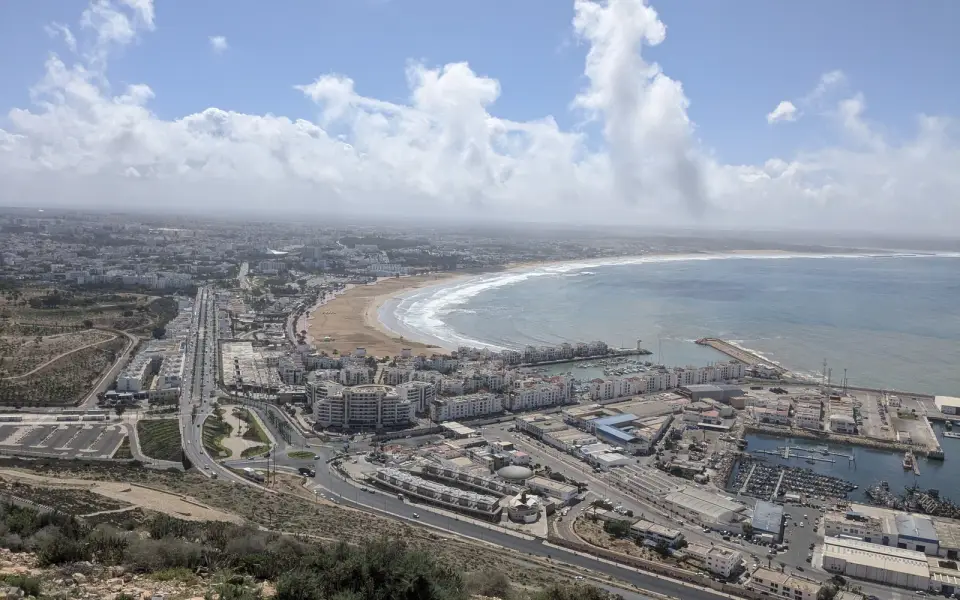
Agadir is Morocco's main seaside resort. A wide sandy bay curves along the city, with a long promenade, a marina and a large modern hotel zone. On 29 February 1960 an earthquake destroyed much of the old city, and the Agadir you see today was rebuilt afterwards, with low-rise buildings, wide avenues and few historic monuments.
That makes it a different trip from the imperial cities. People come for the sun, the beach and the surf, and then use Agadir as a base for the Souss valley, the Anti-Atlas mountains and the Atlantic coast. Add to that a working port, a big covered market and a lively café scene.
Best time to visit
Agadir has one of the mildest climates in Morocco, with sunny days through most of the year and comparatively gentle winters. That is why it is popular for winter holidays. Spring and autumn are comfortable for walking and for the beach.
July and August are warm and busy, with Moroccan and international families on holiday. Sea fog can drift in on some mornings along the coast. The Atlantic is cool, even in summer, and waves can be strong, so check local conditions and flags before swimming.
Getting there and around
Agadir-Al Massira airport is outside the city, with flights from many European cities and from other Moroccan cities. There is no railway line, so long-distance journeys are by bus or shared taxi. Services link Agadir with Marrakech, Essaouira, Casablanca and the towns of the south.
Within the city, petit taxis are the main way to get around, and the promenade is easy for walking. To reach the villages on the coast to the north, such as Taghazout, take a bus or a shared taxi. For the Souss valley and the mountains, many visitors rent a car or book a day tour.
Neighbourhoods
The beachfront and the tourist district
The main bay with hotels, restaurants and a promenade. This is where most visitors stay.
The marina and port
A small harbour district with restaurants and a mix of fishing boats and pleasure boats.
Talborjt
A central, residential area with local shops, cafés and the gardens of the central square.
Founty
A quieter beach area north of the centre, with large hotels.
Oufella
The ruined kasbah on the hill above the city. It is the oldest part of the site, with a view of the whole bay.
Taghazout and Anza
Fishing villages to the north, now known as surf spots with surf camps and small hostels.
Top things to do
The beach and promenade
A long strip of sand with loungers, cafés and walkers at sunset.
Oufella kasbah
The ruins on the hill carry an inscription in Arabic reading God, Country, King. The walk up gives the best view of the city.
Souk El Had
A large walled market with stalls of spices, olives, clothing, household goods and crafts. The name comes from the Arabic for Sunday, the traditional market day.
Marina and fishing port
A place for a stroll, a coffee or a meal of fish.
Surfing at Taghazout
The coast north of Agadir has surf breaks that suit different levels. Surf schools offer lessons for beginners.
Souss-Massa National Park
A protected coastal area south of the city, known for its birds, including the northern bald ibis.
Paradise Valley
A gorge with pools and palm trees in the foothills of the High Atlas, within reach on a day trip.
Taroudant
A walled town inland, in the Souss valley, sometimes called a little Marrakech for its ramparts and souks.
Food to try
Fresh fish and seafood
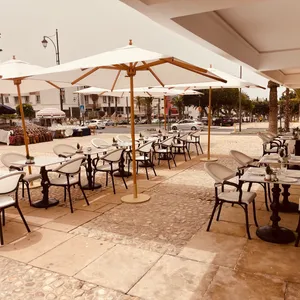
Agadir has a major fishing port. Grilled fish, sardines and shellfish are easy to find on the seafront and at the port.
Argan products
The region is argan country. Amlou, made from almonds, honey and argan oil, is the typical spread.
Tagine and couscous
As elsewhere in the country, with Amazigh (Berber) variations in the south. Saffron from the Souss region turns up in some dishes.
Fruit and vegetables
The Souss valley is a major growing area, and the local markets reflect it, particularly for citrus and tomatoes.
Mint tea
Offered everywhere, usually very sweet.
Itinerary
One day
Morning at the beach and promenade, lunch with grilled fish at the port, and an afternoon at the Oufella kasbah for the view and Souk El Had.
Two days
Add a day at Taghazout for a surf lesson or a walk along the coast, with lunch at a beach café.
Three days
Spend the third day at Souss-Massa National Park, or at Paradise Valley, or driving to Taroudant.
Practical tips
Because the city centre is small and flat, you can cover it on foot or by bike. The tourist zone is spread out, so a petit taxi is handy for evening trips.
If you surf, ask about local conditions and rip currents, and use a school or a lifeguarded beach if you are unsure. Many surf camps run all year but are busiest in winter.
Bring a layer for the evening. Even a warm day can cool quickly once the sun drops over the Atlantic.