Dieser Reiseführer ist auf Englisch und Französisch geschrieben. Du liest die englische Version.
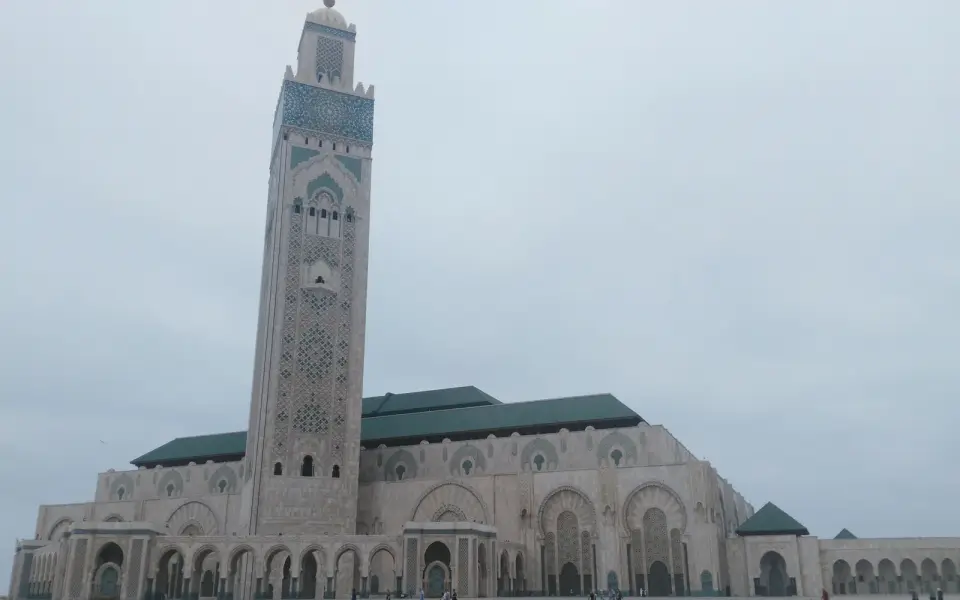
Casablanca is Morocco's largest city and its main port and business centre. It does not have a medieval skyline or a postcard medina. What it has is a modern city built quickly on the Atlantic: a downtown of French-era Art Deco and Mauresque buildings, a long seafront, and a mosque that has become a national symbol.
Many visitors only pass through, since the main international airport is here. Staying a day or two shows you the Morocco that most Moroccans live in: cafés full of regulars, seafood by the harbour, new galleries, and neighbourhoods that change character every few blocks.
Best time to visit
The Atlantic keeps temperatures moderate all year, which makes Casablanca the least extreme of the big cities. Spring and autumn are the most comfortable. Summer is warm and humid, with sea breezes along the coast. Winter brings rain and grey days, so it is a better season for museums and indoor visits than for walking along the water.
The beaches and seafront promenades are busiest in July and August, when many Moroccans take their holidays.
Getting there and around
Mohammed V International Airport is the country's busiest, with a direct train to the city centre. Casa Voyageurs is the main railway station, with frequent services to Rabat, Marrakech and Tangier, including the high-speed Al Boraq service on the northern line. Casa Port station is closer to the old medina and downtown.
Within the city, the tramway runs across central districts and is the simplest option for crossing town. Red petit taxis handle most short trips, and white grand taxis run set routes between districts or to nearby towns. Traffic is heavy at rush hour, so leave generous time if you have a train to catch.
Neighbourhoods
Downtown and Mers Sultan
The central grid around Place Mohammed V and the surrounding avenues has the best concentration of Art Deco and Mauresque facades. A walking tour here takes about half a day.
The Old Medina
Smaller and less polished than Fès or Marrakech, and more residential than touristy. It sits by the port and the Sqala bastion.
Habous
The "new medina", laid out in the 1920s in a traditional style with arcaded streets, bookshops, pastry sellers and a mosque.
Ain Diab and the corniche
The beach district west of the centre, lined with cafés and restaurants facing the ocean.
Maarif and Gauthier
Residential and commercial areas with many of the city's cafés, boutiques and everyday restaurants.
Anfa
A hillside district of villas, embassies and large gardens.
Top things to do
Hassan II Mosque
Built on a platform over the ocean and finished in 1993, it is one of the largest mosques in the world, with one of the tallest minarets. It is one of the few mosques in Morocco that non-Muslims can enter on a guided visit.
Art Deco walk
Look up in the streets around Place Mohammed V and the central market. The stylised ironwork, the carved cornices and the mix of Art Deco with local motifs are the city's defining architecture.
The Habous quarter
A calm place to walk in the morning, with arcades, craft shops and bakeries.
Old Medina and the Sqala
The bastion by the port, with a garden inside the walls and cannons facing the sea.
Museum of Moroccan Judaism
A small museum devoted to the history and culture of Moroccan Jews, which is an important part of the country's past.
The corniche at Ain Diab
A seaside walk that fills up at sunset, with the lighthouse as a landmark.
Central Market
A covered market near downtown for fish, produce and spices.
Sacré-Cœur
The former cathedral, now a cultural centre, an unusual mix of Gothic and Mauresque styles.
Food to try
Seafood
As a port city, Casablanca does good grilled fish, calamari and prawns. Many locals eat at stalls near the harbour and in the Central Market.
Sardines
Grilled whole, or stuffed with chermoula, the herb and spice marinade used along the Atlantic coast.
Tagine and couscous
Tagine is everywhere. Couscous is the Friday dish, served in the middle of the day at home and at restaurants.
Bakeries and pastry
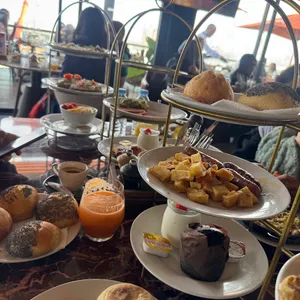
Casablanca has a long tradition of French-style pastry shops alongside Moroccan sweets such as gazelle horns and sellou.
Street snacks
Look for grilled corn in summer, soups from carts in winter, and fresh juices all year.
Itinerary
One day
Start with the Hassan II Mosque guided visit in the morning, walk the Art Deco streets of downtown at midday, have a seafood lunch near the market or port, and finish with the corniche at sunset.
Two days
Add the Old Medina and the Sqala bastion, the Habous quarter, and an afternoon in a gallery or at the Museum of Moroccan Judaism.
Three days
Use the third day for a trip to Rabat by train, or south to El Jadida's Portuguese cistern. Azemmour, with its old town above the Oum Er-Rbia river, is another option.
Practical tips
Casablanca is a big city, and distances are longer than they look. Plan neighbourhood by neighbourhood rather than trying to cover everything in one day.
Book your Hassan II Mosque visit ahead if you can, and check which days and times are open to visitors. Dress modestly, and expect to remove your shoes.
Cafés are social spaces. Order a coffee or mint tea, take your time, and nobody will rush you. The city is more relaxed about dress and nightlife than many Moroccan cities, but still conservative in places.